PhenoSR

Algorithm

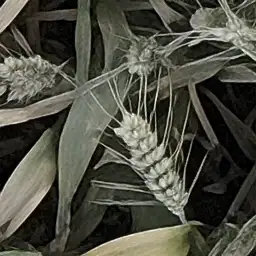
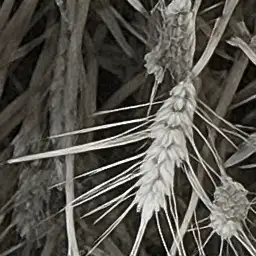
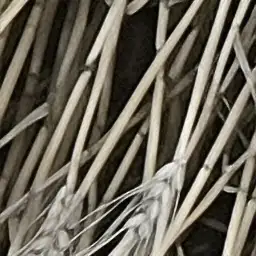
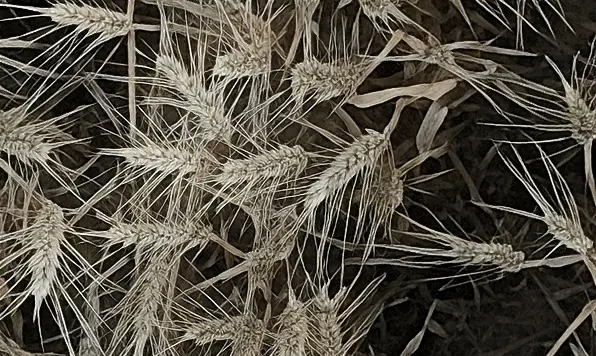
Organ-level phenotyping is critical for crop breeding and precision farming by providing information directly associated with yield and quality. Unmanned aerial vehicles (UAVs) are widely utilized in large-scale field experiments for their versatile image collection capabilities. However, RGB images captured at high altitudes often lack the resolution for accurate organ-level phenotyping, as collection efficiency is prioritized. Deep learning-based image super-resolution (SR) methods can enhance image resolution, but they usually fail to address the challenge of obtaining paired low-resolution (LR) and high-resolution (HR) data for training under field conditions. Moreover, the varying significance of organ-level phenotyping across different regions in UAV images is often neglected, slowing down reconstruction.

Reconstruct Multi-height UAV Image

5.547

NIQE

193.627

FID

0.461

hyperIQA

Outperform Eight SR Algorithms

State-of-the-art

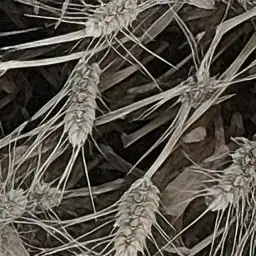
Quantitative results showed that PhenoSR achieved the highest SR performance compared to eight other algorithms in terms of FID and hyperIQA. Quantitative results were calculated on spikes, other organs (e.g., leaf and stalk), and entire images, respectively. For spike pixels, the FID demonstrated an average reduction of 9.39%, while the hyperIQA showed an average enhancement of 10.68%. The FID demonstrated an average reduction of 6.12% for other organs, while the hyperIQA increased by 15.04%. PhenoSR achieved an average FID reduction of 12.31% for entire images and an average hyperIQA improvement of 25.53% relative to the other algorithms.

Apply to More Crops

Transferability

PhenoSR recovers organ textures of rice from low-resolution UAV images collected at heights ranging from 10 to 40 m. Quantitative results show that PhenoSR significantly improved the image resolution captured at multiple flight heights. The average NIQE, FID, and hyperIQA metrics for SR images across seven flight heights were 6.347, 173.091, and 0.502, respectively, compared to 31.277, 205.835, and 0.375 for LR images. Compared to LR images, SR images exhibited an average decrease of 78.86% in NIQE and 17.19% in FID, alongside a 34.11% improvement in hyperIQA.

Apply to More Spectrums

Transferability

The average hyperIQA scores for SR images of the green (G), red (R), red-edge (RE), and near-infrared (NIR) bands across six flight altitudes were 0.550, 0.537, 0.559, and 0.551, respectively. In comparison, the corresponding scores of LR images were 0.203, 0.207, 0.207, and 0.222, respectively. This means that the hyperIQA metrics of SR images are improved by 170.82%, 159.92%, 170.63%, and 148.24% compared to those of LR images, respectively. Moreover, PhenoSR can enhance spatial resolution while preserving spectral information.

From Ambiguity to Clarity

Empower Organ-level Phenotyping

Plot segmentation

Wheat spike counting

Flowering spike detection

Awn morphology analysis

Citation

If you find this work useful for your research, please consider citing our paper:

@article{zhang2025phenosr,
  title={PhenoSR: Enhancing organ-level phenotyping with super-resolution RGB UAV imagery for large-scale field experiments},
  author={Zhang, Ruinan and Jin, Shichao and Wang, Yi and Zang, Jingrong and Wang, Yu and Zhao, Ruofan and Su, Yanjun and Wu, Jin and Wang, Xiao and Jiang, Dong},
  journal={ISPRS Journal of Photogrammetry and Remote Sensing},
  volume={228},
  pages={582--602},
  year={2025},
  publisher={Elsevier}
}

Ready to super-resolve your UAV images?